

Living in the Virtual

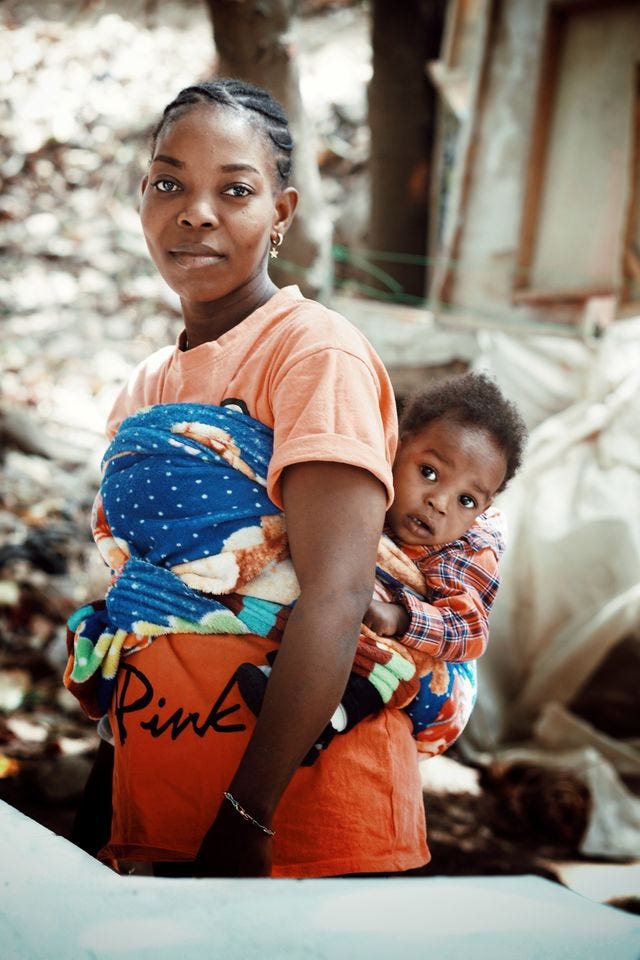
Found on Pixels—Babywearing
Innocenti Declaration of 2005, originally 1990
“Guided by accepted human rights principles, especially those embodied in the Convention on the Rights of the Child, our vision is of an environment that enables mothers, families and other caregivers to make informed decisions about optimal feeding, which is defined as exclusive breastfeeding* [vwmcclain’s emphasis] for 6 months followed by the introduction of appropriate complementary feeding and continuation of breastfeeding for up to two years of age or beyond. Achieving this vision requires skilled practical support to arrive at the highest attainable standard of health and development for infants and young children, which is the universally recognized right of every child.” Gabrielle Palmer, The Politics of Breastfeeding: When Breasts Are Bad for Business, pg.368
*“Exclusive breastfeeding means that no other drink or food is given to the infant; the infant should feed frequently and for unrestricted periods.
“Early initiation of breastfeeding [vwmcclain’s emphasis] was associated with a reduced risk of neonatal mortality. Initiating breastfeeding after the first hour doubled the risk of neonatal mortality. Exclusive breastfed neonates had a lower risk of mortality and infection-related deaths in the first month than partially breastfed neonates. Exclusively breastfed neonates also had significantly lower risk of sepsis, diarrhea, and respiratory infections compared with those partially breastfed. The pooled evidence indicates that substantial benefits in reducing neonatal mortality and morbidity can be achieved with effective promotion of early initiation of breastfeeding and exclusive breastfeeding during the first month of life.” “Timing of Breastfeeding Initiation and Exclusive Breastfeeding During the First Month of Life: Effects on Neonatal Mortality and Morbidity—A Systematic Review and Meta-Analysis,” by J. Khan et al., Maternal Child Health. June 2014. https://doi.org/10.1007/s10995-014-1526-8
World Breastfeeding Week, August 1-7th celebrations are just around the corner. I imagine celebrations will be somewhat muted on the media because the corporate media is supported by the advertising dollars of the infant formula industry. The other day I happened to watch on my laptop a msn news-feed in which there was at least 2 formula advertisements in less than 5 minutes of news. I believe infant formula advertisements should be banned. The infant formula lobbyists will continue to lobby Congress and US governmental health agencies to ensure that legislation on maternal leave after the birth of a baby is minimal or non-existent, meaning that mothers will need to either express their milk or use breast milk substitutes.
Believe it or not, I have spent most of this month trying to put together this particular post. I encountered a number of obstacles: computer problems, internet issues, and actually had a version of this post partially erased. Did I accidently erase what I saved? Or do I have gremlins in my computer? My 2007 Word writing program continues to change fonts on me. I must admit it has been a very frustrating month. The gremlins must be laughing!
Anyway first and foremost on my mind was my need to emphasis my belief that breastfeeding education/support must start with 2 objectives, promoting exclusive breastfeeding and early initiation of breastfeeding (within the first hour after birth). Second on my mind is that I question the belief that the use of Virtual “lactation” support will increase breastfeeding in the US. Virtual lactation support is not breastfeeding support, it is support of feeding babies pumped breast milk. It supports the breast pump industry, and by a strange coincidence increases the probability that mothers will also end up using infant formula.
Breastfeeding is not the same behavior as breast milk-feeding. Both behaviors deliver the same product (although plastic bottles. bottle nipples, and pacifiers increase risk of a baby’s ingestion of microplastics), but breast milk-feeding is caused by the separation of mother and baby. Breastfeeding requires skin-to-skin contact, and separation of mother and baby is minimal. Newborn human babies have an instinct to be near their mothers. Separating mothers and babies stresses mothers and babies. Crying by babies is their last resort in communicating to their mothers that they are stressed.
Mothers also will be stressed and cry from being separated from their babies. Some years ago I had a conversation with an employed mom who had just returned to employment. She told me she cried at work because she missed her baby. And she cried when she was home because she felt she was not giving her job her full attention. Employment for this mom was an economic necessity, as it is for many mothers in the US.
Mothers and fathers need accurate breastfeeding information, the documented research that we have had for many years in which breastfeeding and particularly exclusive breastfeeding has shown to make a difference in the health of infants and mothers compared to formula fed babies and mothers. Certainly doing both breastfeeding and formula is better than exclusive formula feeding, but it is evident that the health of infants and women are negatively impacted.
Anytime a person makes a choice, they should have enough knowledge of risks and benefits of that choice. What the American public continues to get is propaganda about not making a judgment call on mothers for their choices-particularly the decision to use infant formula. We are told that infant formula and breastfeeding is an equal choice. Is it really an equal choice?
Don’t be “judgy,” spouts various media influencers. Yet making a judgment call according to a dictionary means to hear the evidence and form an opinion. Don’t be judgy seems to always be directed at breastfeeding advocates. I have read and heard the evidence, and I will make a judgment call directed towards the institutions and corporations that continue to promulgate misinformation to the public, that judgment is not directed towards mothers. Advertising convinces the public that infant formula is the default choice, and that man-made breast milk components make the product similar to breast milk or closest to breast milk. Notice that the infant formula industry does not say that their product is similar to breastfeeding. Infant formula labels use to say, breastfeeding is best. In my opinion there is a good reason that the industry now uses the breast milk comparison. Women who pump their milk have a greater risk for eventually buying infant formula. The infant formula industry supports breast milk-feeding because they understand that they will profit from it.. Exclusive breastfeeding is the real economic competition to formula feeding. Exclusive breastfeeding means that the mother is not dependent on supply chains that can fail. And right now, I would say we have a great probability that supply chains are going to fail due to the United States of Israel War against Iran.
What started these thoughts on exclusive breastfeeding and early initiation of breastfeeding is last month I received an email from Carson Quinn, a media specialist for a company called SimpliFed. At that time, I did not know she was the media contact for SimpliFed, and I just thought the email was rather odd. She wrote that she thought I ought to contact Andrea Ippolito, the CEO and Founder of SimpliFed. I had never heard of SimpliFed, and decided to look at the website first. SimpliFed offers “judgment-free virtual feeding support.” The website states their support of baby feeding and lactation. I believe the use of the word baby feeding means infant formula feeding. And that lactation means support of breast milk-feeding, by helping moms obtain breast pumps through the moms’ insurance policies. They have IBCLCs and CLCs available for virtual visits. Their website states the following,
“SimpliFed is a comprehensive baby feeding, pregnancy, and post partum care program connecting new families with expert clinical guidance and judgment free care from the comfort of home.”
“Our patients meet with certified lactation consultants, nurse practitioners and other maternal health experts for baby feeding, mental health guidance and so much more.”
“87% of patients feed with breastmilk for at least 3 months (national average is 69%)” [vwmcclain’s comment: note the increase is patients feed with breastmilk, Is the national average based on breastfeeding or breast milk-feeding?]
“greater than 80% completion of mental health screening for postpartum depression and anxiety.”
“low risk virtual OB care, screening, and follow-ups”
“Bi-directional data exchange with healthcare systems and providers”
My Response
Hi Carson, I spent some of my time this morning looking at the SimpliFed website, and found that SimpliFed has partnered with a formula company, Nature’s One which is now owned by the Bobbie infant formula company. I am not sure how one can be supportive of breastfeeding and partnered with an infant formula company. What is the relationship between SimpliFed and Abbott Labs? I also noticed that SimpliFed had advertised for CLCs, which is surprising because CLCs have only 1 week of a crash course of breastfeeding education, while IBCLCs have a lengthy education, and many hours of hands on experience with mothers and babies.
I got a response to my email to Carson Quinn from the CEO Andrea Ippolito,
“During the infant formula shortage of 2022/2023 we helped moms who needed it get access to formula (at cost) via Nature’s one. We no longer have a relationship with the brand, and we have never had a relationship with Abbott.”
“The vast majority of our providers (well over 90% are IBCLCs or IBCLC/NPs. As you know, it is very hard to earn IBCLC hours, so we are truly honored to support CLCs here in their training journey to become IBCLCs.” [vwmcclain, I have never heard of the credential IBCLC/NP. I am guessing that NP stands for nurse practitioner but
I did not respond to Andrea Ippolito’s email response. I had various reasons for not doing so. She certainly is welcome to respond to this post as well as Carson Quinn or anyone else. We are now witnessing the rise of companies who offer Virtual Lactation assistance through Certified Lactation Counselors (CLCs) and International Board Certified Lactation Consultants (IBCLCs). These companies advertise that they can help mothers obtain free breast pumps through the mother’s health insurance. My understanding is that there are a lot of US citizens who do not have health insurance. Is getting a free breast pump through health insurance really free? Supposedly the Affordable Care Act provides free pumps and even lactation consults. It sounds like many mothers may be denied coverage by their insurance companies, and so companies like Simplifed, help mothers obtain their health insurance coverage. That is a good thing for moms, but I still have issues with Simplifed because their website makes it seem like mothers will have IBCLCs for consults, but from the way their CEO states in her email to me, it seems like there will be CLCs also doing consulting. Will mothers understand the difference between a CLC and an IBCLC?
I also found Andrea’s email curious, and reading the content of simplified I realized I had a strong feeling of déjà vu. How many years ago were we bombarded with the Fed Is Best organization’s similar media pronouncements? I wrote a number of articles on Fed Is Best in my blog, humanmilkpatentpending. Both Fed Is Best and SimpliFed appear to me to have the same belief that breastfeeding advocates are judgmental and hurt the feelings of formula feeding mothers. Neither organization seems to recognize that breastfeeding mothers faced and still face discrimination for feeding babies in public places (even though there are now laws protecting breastfeeding mothers feeding their babies in public places). I believe a lot of breastfeeding mothers have breast pumps in order to feed their babies in public to alleviate their fear of harassment. From Valerie’s blog in 2018 on a critique of Fed Is Best in emergency situations. https://vwmcclain.blogspot.com/2018/09/a-critique-of-fed-is-bests-emergency.html
Andrea’s email response regarding their partnership with a formula company as a response to the infant formula shortage in 2022 is strange. She states the shortage was from 2022-2023. Yet various articles that I have read state that the shortages were mostly over by December 2022 and only some areas of the country had shortages in 2023. The partnership with the infant formula company began in March of 2023 according to various articles. Yes, she states that partnership ended. When do business partnerships really end?
But the reasoning for the partnership shows a lack of awareness that such partnerships are a conflict of interest. How can an organization with a medical staff support and protect breastfeeding and have a business relationship with infant formula companies? Particularly, how can IBCLCs and CLCs support and protect breastfeeding and infant formula feeding? Yes, babies must be fed and sometimes that means formula feeding. I am not suggesting that breastfed babies should not be allowed infant formula. There are a number of good reasons to recommend infant formula for a breastfeeding infant, such as a large loss of weight. Donor milk should be recommended but is prescription only and is very expensive.
I believe infant formula should be prescription only. The number of infant formula recalls for bacterial contamination should make this particularly important. We have a product sold in grocery stores and if not prepared correctly has the potential to cause death or severe illness in babies. Infant formula is also understood by medical evidence to be associated with quite a few health risks. We recognize that drugs have side effects and require prescriptions. But we accept a product that has caused death and illnesses in babies that can be bought readily in any grocery store, box store or online—Amazon?
Dynamics of the US 2022 Infant Formula shortage study. https://www.sciencedirect.com/science/article/pii/S0362028X26000487
“Our findings from almost 100,000 infants substantially strengthen the evidence showing that both early initiation and exclusive breastfeeding are associated with reduced neonatal and infant mortality.” By NEOVITA Study Group, “Timing of initiation, patterns of breastfeeding and infant survival: perspective analysis of pooled data from three randomized trials.” The Lancet Global Health-early initiation of breastfeeding April 2016 https://www.thelancet.com/journals/langlo/article/PIIS2214-109X(16)00040-1/fulltext
“Breastfeeding is a woman’s health issue. Disruption of breastfeeding is associated with higher rates of maternal breast and ovarian cancer, diabetes, hypertension, myocardial infarction, and stroke. Breastfeeding is also a children’s health issue. Not being breastfed is associated with higher rates of infectious morbidity, childhood leukemia, sudden infant death syndrome, higher rates of obesity and diabetes and lower IQ.” By Alison M Steube, Ninth Edition Breastfeeding: A Guide for the Medical Profession, 2022, pg.193.
*****A variety of interesting bits of information*****
“Acute infectious gastrointestinal diseases, for example, are a major cause of illness and death in infants and young children throughout the world. In the developing countries, infectious gastrointestinal diseases are estimated to cause up to 12,000 deaths per day. Diarrheal disease is also an important health problem in the developed countries. In the US over 200,000 children This results in nearly 880,000 in-patient hospital days, over 500 deaths, and almost one billion dollars of in-patient costs per year.” US patent # 5505955, “Anti-diarrheic product and method of treating rotavirus-associated infection,” assigned to Senomed,Inc, Cancer Research Fund of Contra Costa, The John Hopkins University School of Medicine. Filed in January 1995. Inventors: Robert H Yolken, David S Newburg, Jerry A Peterson https://patents.justia.com/patent/5505955
This patent would use Human Milk Fat Globule (HMFG) because research showed it inactivated rotavirus. Their claim was for the real human milk component. This should not have become a patent because what is natural or nature is not invention. The patent examiners obviously missed this important issue. US patents have a life-span of 20 years. So, this patent is dead. David S Newman was a founder and Scientific advisory Board Chairman to a company, Glycosyn. I don’t believe this company exists anymore. It was one of a few companies that manufacture Human Milk Oligosaccharides (HMOs)—all HMOs are genetically engineered not the real component. He is listed co-inventor to quite a few patents. https://patents.justia.com/inventor/david-s-newburg
According to a September 2024 article at Healthcare Consultants USA website, globally diarrhea is the 2nd biggest killer of children under 5. In the US, diarrheal disease causes each year an estimated 167,000 hospitalizations and 300 deaths among children under 5. https://healthcareconsultantsusa.com/how-many-americans-lost-their-lives-to-diarrhea.html
“A meta-analysis by Bachrach et al. in 2003 revealed that ‘among generally healthy infants in developed nations, more than a tripling in severe respiratory tract illnesses resulting in hospitalization was noted for infants who were not breastfed compared with those who were exclusively breastfed for 4 months.’” Doctors Robert and Ruth Lawrence, Ninth Edition Breastfeeding: A Guide for the Medical Profession, 2022. Pg.32
Baby food recall 7/21/26 Pumpkin Tree Peter Rabbit Organics Banana & Strawberry Fruit Puree Pouches 4oz (113g) Potential presence of soft plastic in the finished product. https://www.fda.gov/safety/recalls-market-withdrawals-safety-alerts/pt-organics-limited-recalls-select-pumpkin-tree-peter-rabbit-organics-banana-strawberry-fruit-puree
May the current US Administration and Congress work towards peace and understanding, using diplomacy rather than bombs and bullets. Have a thought-full World Breastfeeding Week!
Valerie, I always love reading you because you cut to the chase and winnow out the BS.
There is no such thing as "virtual" breastfeeding because babies and their mothers live in an embodied world that only operates "in real life". There is no such thing as an iBaby (yet).
And when even groups like LLLUSA tell "parents" that exclusive breastfeeding is too hard for modern mothers and have discussions on FB groups like LLL Leaders that joke about breaching the WHO Code, they have moved from breastfeeding support into formula advocacy. https://lucyleader.substack.com/p/la-leche-league-eliminates-mothers